The process for getting a driving permit in Uganda is not complicated, but it is sequential. Each stage depends on the one before it, and people lose weeks by turning up to a stage they are not ready for.
Here is the whole thing in order.
Step 1: Register with a licensed driving school
Training has to come from a licensed school. This is where your paperwork starts, and a good school handles most of it on your behalf so you are not queuing at offices working out which form applies to you.
Bring a valid National ID or passport and passport-size photographs. That is enough to open your file.
Step 2: Get your learner's permit
The learner's permit is provisional. It is what makes it legal for you to practise on a public road under supervision, and you cannot begin proper road training without it.
Your school prepares and submits the application. You do not need to have driven a metre yet.
Step 3: Theory — the highway code
Signs, markings, right of way, junction discipline, and the rules that decide who goes first when two drivers want the same piece of road. It is tempting to skim this and get to the driving. Do not. Nearly every practical fault traces back to a rule the driver never properly learned.
Step 4: Practical training
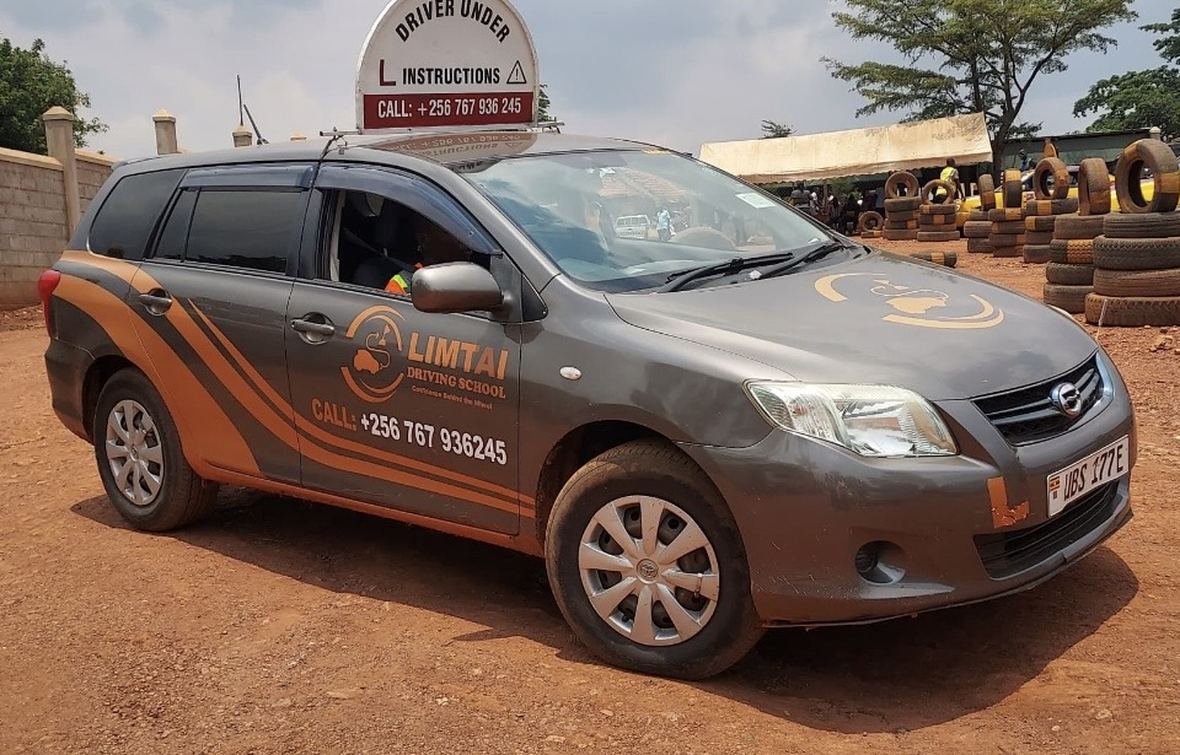
This is the bulk of it. At Limtai the full package runs three weeks, five days a week — fifteen sessions with an instructor, on a dual-marked vehicle.
What you should be covering:
- Vehicle control: clutch, gears, steering, smooth braking
- Moving off and stopping on level ground and on a hill
- Road positioning, lane discipline and observation
- Junctions, roundabouts and right of way in live traffic
- Parking, reversing and turning in a confined space
- Reading the road: hazard awareness, following distance, dealing with bodas
Step 5: Certificate of competence
When your instructor is satisfied, the school assesses you and issues a certificate of competence. This is the document that says you have been properly trained, and you need it before you can be tested.
Step 6: The IOV practical test
Every applicant must pass the official practical test administered by the Inspectorate of Vehicles. There is no way around it, and no permit is issued without it.
Bring a valid National ID or passport, your learner's permit and your photographs. Your school books the slot and, at Limtai, an instructor goes with you.
What examiners are actually watching:
- Whether your observation is real — mirrors and shoulder checks you actually perform, not perform for show
- Whether you stop completely at STOP lines
- Whether you control the vehicle smoothly, particularly clutch and hill starts
- Whether you position correctly and signal in good time
- Whether you handle junctions and roundabouts with the right priority
Step 7: Permit processing and collection
Once you pass, the permit application goes in. You choose the validity period, and this is worth thinking about rather than defaulting to the cheapest.
- One year — lowest upfront cost, but you are back within twelve months
- Three years — the usual choice, and cheaper per year
- Five years — best value per year, and no renewal until 2031
The permit is printed by the issuing authority, which takes as long as it takes. We follow it up and tell you the moment it is ready to collect.
What about renewals and replacements?
If you already hold a permit that is expiring, you do not repeat any of this. Renewal is a paperwork exercise: bring your existing or expired permit, ID and the fee. Renewals at Limtai start at UGX 180,000.
If your permit was lost or stolen, that is a replacement rather than a renewal, and you will usually need a police report alongside your ID.
How long does the whole thing take?
Three weeks of training, then the test, then however long the authorities take to print the permit. If your schedule does not allow three straight weeks of weekdays, weekend and evening classes cover the same syllabus on your timetable.
Ready to start driving?
Limtai trains from Kamwokya and Kireka, on marked vehicles with qualified instructors. Full package with permit from UGX 650,000, lessons from UGX 100,000 a week.
Leave your details WhatsApp usRead next
Passing the IOV driving test: what examiners look for
The faults that fail most candidates are not dramatic. They are small, repeatable and entirely avoidable.
Read more
Automatic or manual: which should you learn in Uganda?
One is quicker to learn. The other opens more doors. Here is how to decide before you pay for a course.
Read more